Vipassana through the modern lens
I first heard about Vipassana few years ago. Also known as "10 day silent meditation", it seemed like an extreme challenge for highly spiritual people detached from the regular joys (and miseries) of life. So… not for me.
Recently, a close friend has gone through one and highly recommended it. Blame middle-life crisis, but this time I decided to give it a try. "It could be a cool new challenge", I thought. "How hard could 10 days of 'no talking' be"?
Little did I know how far off my understanding of Vipassana was and how impactful the experience would become.
Why
So why do this? I've recently gone through a major life change — "quitting" my software engineer career of almost 20 years, not really wanting to go back to work for another company, searching for a deeper meaning other than making money and climbing the career ladder, and wanting to apply myself to something more purposeful and meaningful in life (= not involving helping billion-dollar company meet earnings expectations at all costs).
Perhaps related or in parallel to that, I started noticing myself living in the past a bit too much. Thinking about how nice things were "back then", not really having anything to look forward to. I wasn't enjoying life with the same intensity I once had. My brain was getting "solidified" and wired to existing connections; I needed to shake things up deep and from the bottom up. "Grumpy old man" had to go.
Talking to squirrels
I got to the center in Delaware and learned that my next 10 days will be in the form of:
Wake up at 4am
Meditate for 6 full hours throughout the day (up to 16 if you so desire!)
Spend the other 11 hours walking and thinking (no talking, no reading, no writing, no exercise)
Sleep at 9pm
Fantastic… And so 10 days began.
During my time there I often wondered what surrounding neighbors think: a couple dozen people pacing back and forth through the park in the middle of the complex, sometimes standing still and starring into the horizon, sometimes talking to squirrels, sometimes sitting on the bench for so long — with *gasp* no phones in hand — that it would certainly be classified as "cuckoo" in the "real world".
(mental ↔ physical) training
Despite expecting some level of spirituality, I found almost none during the daily practice and discourses. Instead, it felt like we were part of an intensive training bootcamp but instead of physical exercises we were training our minds to be still, to not react, and to observe our deep body sensations. That's it!
As a fitness aficionado, this really appealed to me. It was pure work and pure science. Meditation and sensory observation was something you could progress as you would with neuromuscular adaptations, "flexing" daily to become better, and it having tangible positive effect on your well being.
I realized that as much as we need physical movement, we need mental stillness.
Move your DNA postulated that we're a function of our daily movements and daily behaviors in general. Since I read it, I started paying a lot more attention to how I move: using my left and right limbs equally, noticing tiny but deeply ingrained patterns that I could disrupt. This gave me a deeper awareness of my body. The more crude awareness came from years in the fitness realm — yoga, bodybuilding, powerlifting, martial arts, calisthenics, and CrossFit.
Yet, all of those were body awareness in motion; I lacked body awareness in stillness!
Stillness was so mentally hard for me that I had to always stuff my brain with other activities — working out, working, creating, consuming, partying — anything but the state of just being.
Thankfully, the one thing I could do was breathing well — this was the start of each meditation session and a way to get to a deeper state of interoception. I read Breathe few years ago and it forever changed my perspective on breathing. Then, Oxygen Advantage highlighted the importance of carbon dioxide tolerance and counter-intuitive shallow breathing. I've been regularly practicing breath work ever since, for calming effect and for performance enhancement.
Could it be that this interest in subtler bodily functions was perhaps my search for something else… and that's when meditation came along?
Coming home
Few days in, the thought came and sent shivers down my spine: "This is it. This boiski is coming home."
My meditation journey actually started back in 1998 and is closely connected to yoga practice that my grandma taught in Ukraine when I was just 13 years old. Grandma became somewhat of a celebrity among yogis in the post-USSR area, going from a sick math teacher at 60 years old to an incredible yoga teacher with seminars and thousands of students across the world.
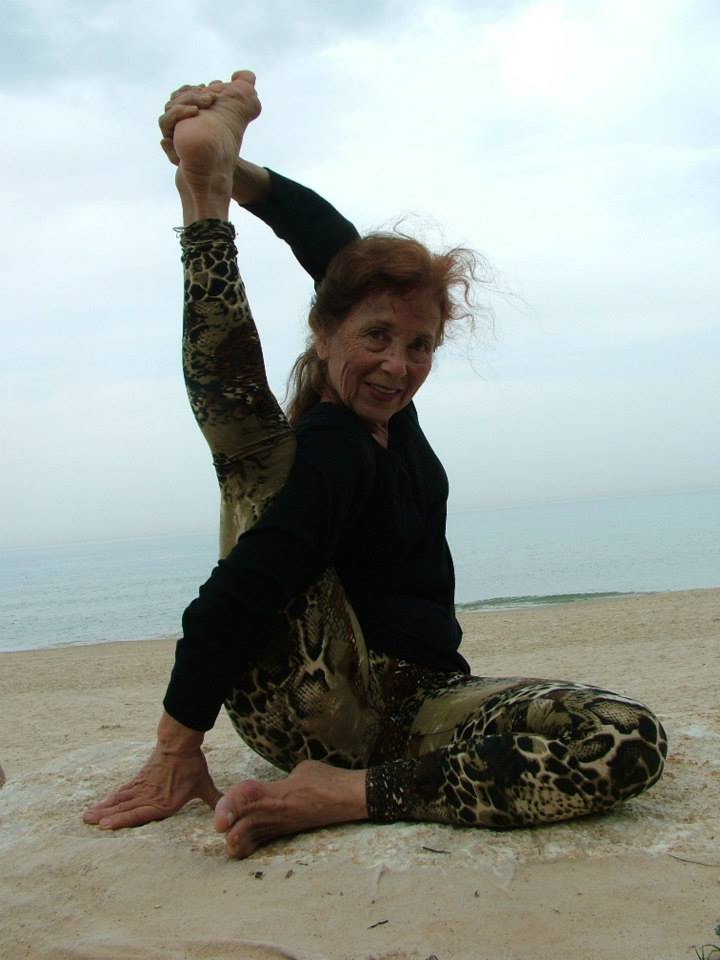
Back then, I practiced yoga daily and quite seriously. I recall getting into deeper meditative states after an intense 90 min ashtanga. Teachers often talked about "Тонкий план" (astral plane in yogi lore) as something you can feel in or around your body but — being a skeptical teenager — I didn't think much of it.
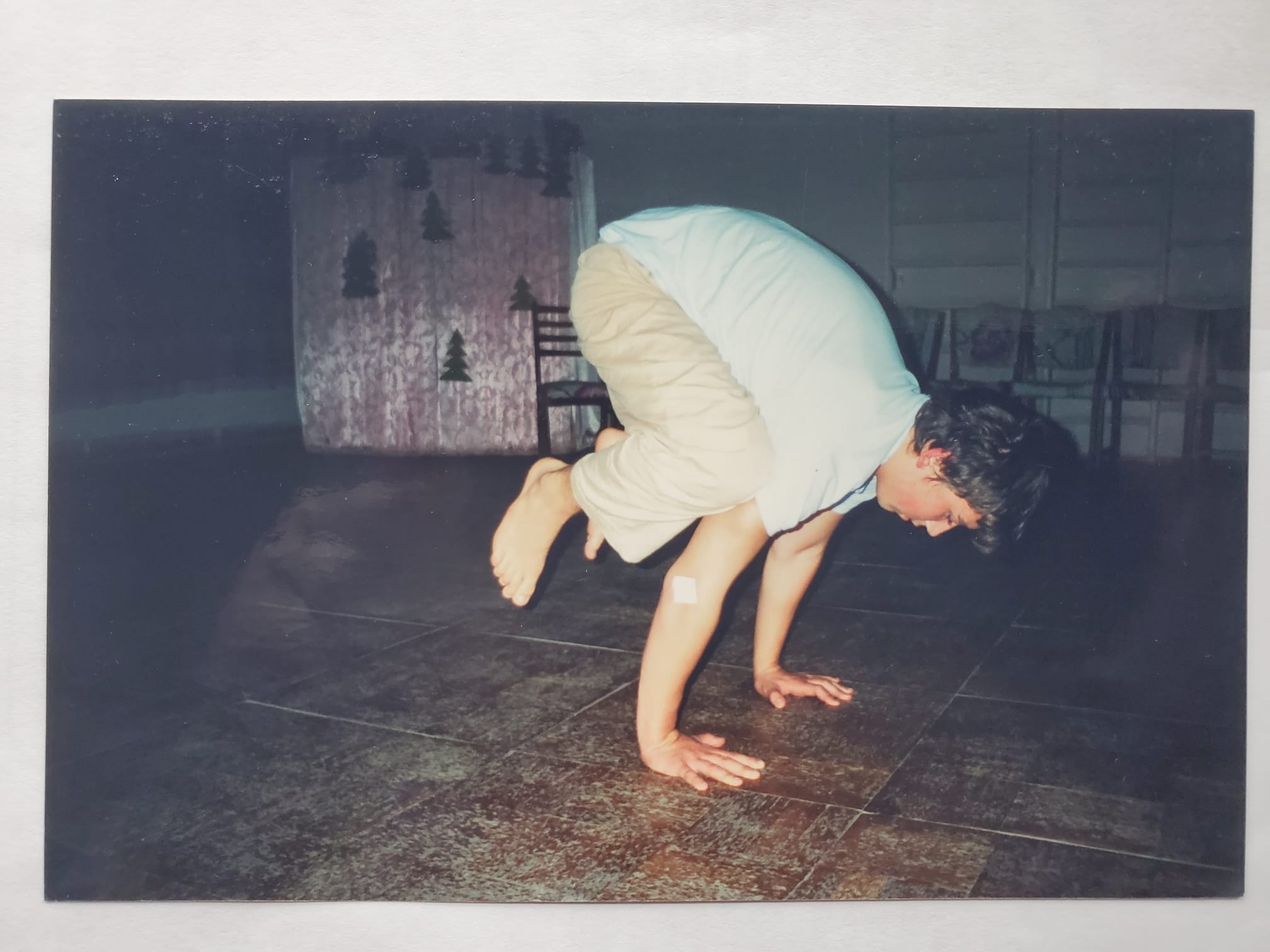
As a fantasy and DnD geek, I was also fascinated with monks and how they would train their bodies and minds to exhibit unheard of feats of strength and resistance.
Then I had to stop because my first girlfriend thought I was getting a little too removed from the real world (to be fair, a 13 year old should probably live through a full range of standard earthly emotions during that age and not get too zen about life :D).
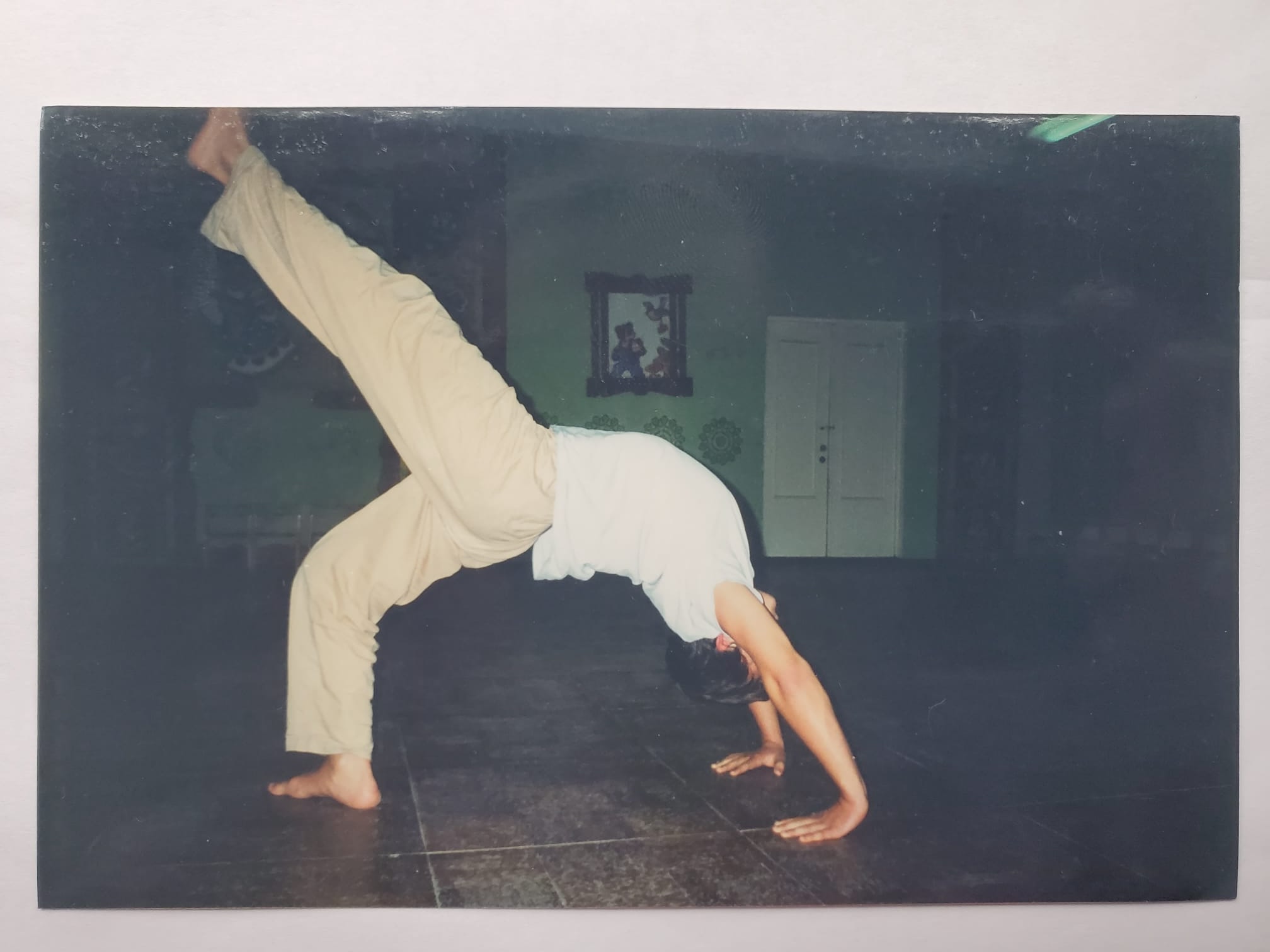
Here I was, in Delaware, 27 years later, practicing that same technique, having similar feelings in a weird circular fashion as life often appears to be.
"But 10 days is so long!"
People say day 3 and 7th are the hardest. I found that every single day was equally hard (including 10th one).
As I was there, 10 days certainly felt way too long and unnecessary. But on day 7 I got a profound realization and thought: "oh so that's why we're still here". Then same thing happened on day 9. And even on day 10. More days means you have more chances to experience wider range of emotions stemming from different thoughts and circumstances around you, either in the now — weather, food — or in a "non-existent" mind realm (past or future).
Benefits
The intended benefit of Vipassana is to learn the technique (1st-4th days), deepen it (4th-9th days), apply it in human interactions (day 10) and then take it with you to the real world via a daily practice.
The actual bouquet of benefits is much more multi-faceted. You can take advantage of each layer below individually, but together they create a powerful punch through your psyche:
Break from devices.
In the modern world of social media, severing dopamine loop is extremely impactful (see Dopamine Nation, Dopamine Detox, etc.)Break from civilization and daily stress.
I noticed that without big city noise there's a lot less anxiety. The startle reflex begets subtle bodily tension that we then carry throughout the day.Undisrupted time to process thoughts.
We rarely have dedicated time to think these days. 10-15min in a shower (look at the insights during r/showerthoughts) and perhaps a weekly 45min therapy session is all you get. Here you have hours upon hours to just think.Entering meditative state that eliminates mind chatter.
As active Beta waves diminish, they are replaced by the calmer and slower Alpha and Theta brainwaves. These are linked to creativity, enhanced learning and memory consolidation.Sensory practice during meditation.
This is the real meat of this whole experience. Who would have thought that Buddha was onto something 2500 years ago:Autonomic Nervous System Regulation: The focused attention on breath and bodily sensations sends signals to the brain that the body is safe, leading to a decrease in heart rate, blood pressure, and the production of stress hormones like cortisol.
Reduced Amygdala Reactivity: By repeatedly and non-judgmentally observing sensations in Vipassana, the practitioner learns to decouple sensory experience from habitual emotional reactions, calming the amygdala's alarm system.
Increased Interoception and Insula Activity: We're now learning that interoception has a host of health benefits such as drastic improvements in anxiety disorders.
Surrender
For me, Vipassana was also a challenge on other levels:
First time no exercise for 10 days (in my 15 years of being obsessed with training)
First time eating vegan food for 10 days (unheard of for this "foodie")
No supplements, no tracking your daily steps, no closing activity rings, no checking recovery score, no fasting timers, none of the other virtual shackles I'd always worry about.
Just pure existence disconnected from the rest of the world. This was the ultimate surrender and trust in the process. My ego fought this with such vengeance, it felt hard, dumb, scary, annoying, counter-productive, unnecessary, and yet… it just had to happen. I came out happier, more present, more driven by the process rather than the goal.
Science
In 2018, I went through a stage of binging on behavioral psychology books — Thinking, Fast and Slow, Predictably Irrational, Nudge, etc. As I was listening to Goenka talk about cycles of craving and aversion and how one begets an ever-increasing loop of misery, I couldn't help but think about all the science we know that explains the same things. The dopamine-driven reward mechanism was a great example of a reinforcing loop from Thinking In Systems and body scanning reminded me of Huberman's NSDR (aka yoga nidra) that I've already been using for short rests.
I did a deep dive into the science of Vipassana teachings and wrote a separate post about it! It's fascinating how we now have scientific backing for the entire thing.
Critique
My main critique is that there was 0 focus on movement. Walking is allowed but not encouraged. I had to stretch all the time and foam roll myself between sittings just to be able to rotate my torso. It was brutal.
I get that you're not supposed to do anything else besides meditation and just being, but some light stretches are certainly very necessary. And the amount of sitting could probably be halfed and would still have the same effect; most people zonk out during long hourly sessions — you can't scan your body for that long without a ton of experience.
The schedule (4am to 9pm) is also very extreme. I would argue that 4 hours of actual meditation a day is plenty, but they give you enough time to do it up to 16 hours if you really want to. For the purpose of learning the technique, it certainly doesn't need to be so long UNLESS it's meant to make you uncomfortable. I'm fairly certain this is one of the intentions and it certainly helps with curbing your ego.
Aftermath
Overall, this was the hardest thing I've done in a long time. And the most rewarding one. In a way, it felt like a near death experience — when you remove everything, your mind clearly understands what's important in life. I am now more present in the moment, have a lot more clarity about what I want in life, less anxiety and the need to rush somewhere in hopes of filling my brain with activities. I have a much better sense of my body which makes it easier to not react to internal or external stimulus, especially the unpleasant one. With the pleasant ones — there's a certain level of distancing where you still enjoy them but not in an all-encompassing, craving way. Truly an incredible tool in one's journey of self-exploration.
Did you like this? Donations are welcome
comments powered by Disqus